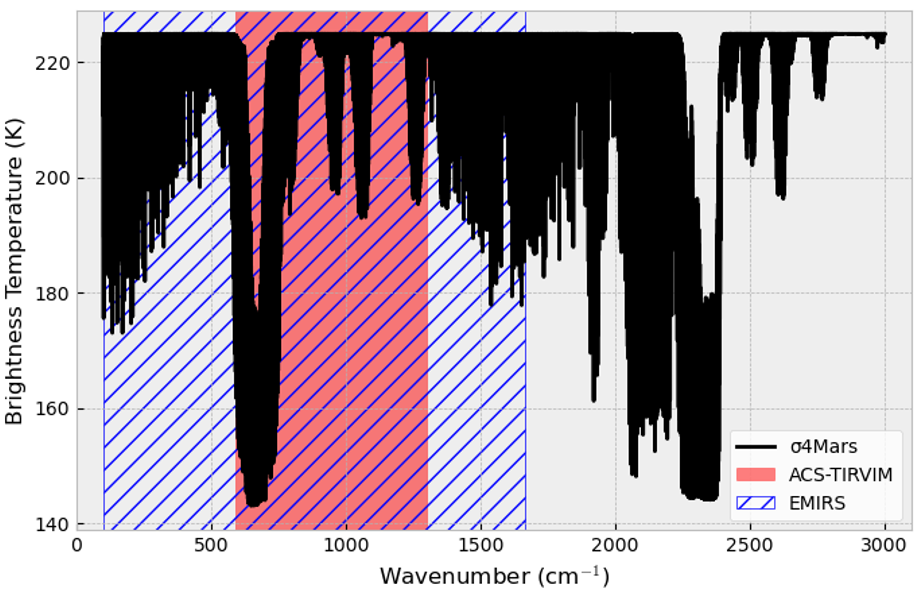
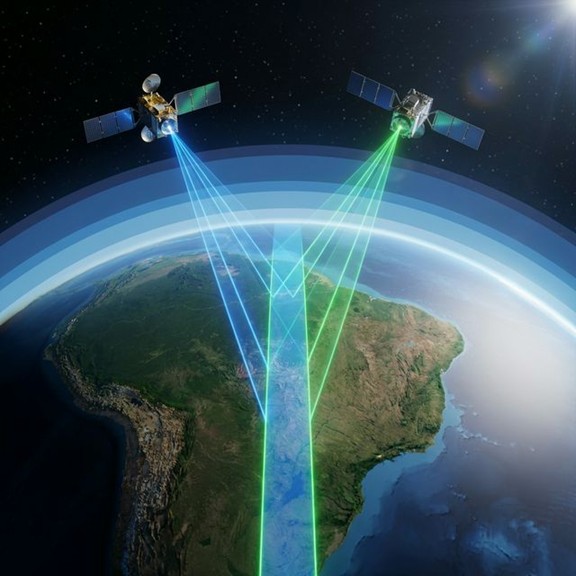
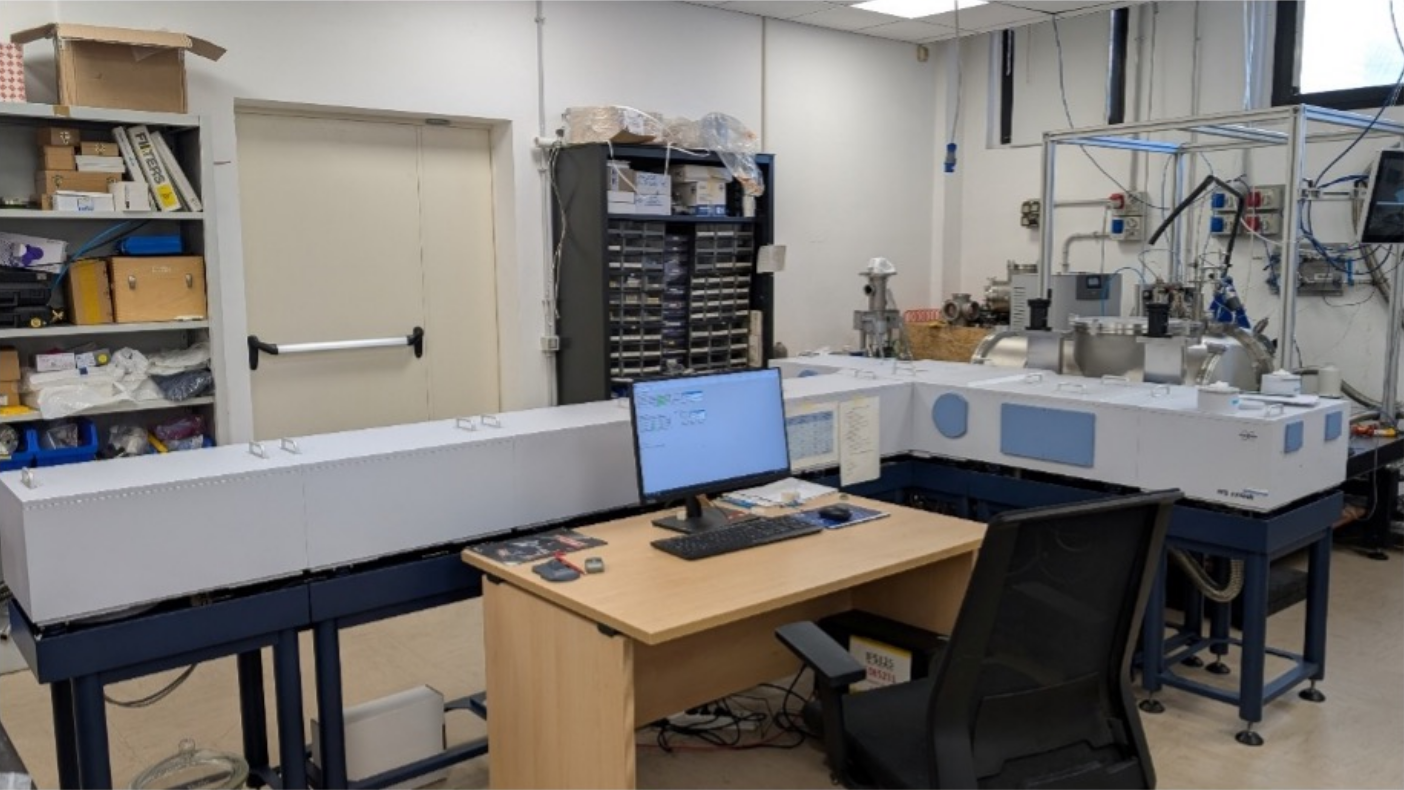
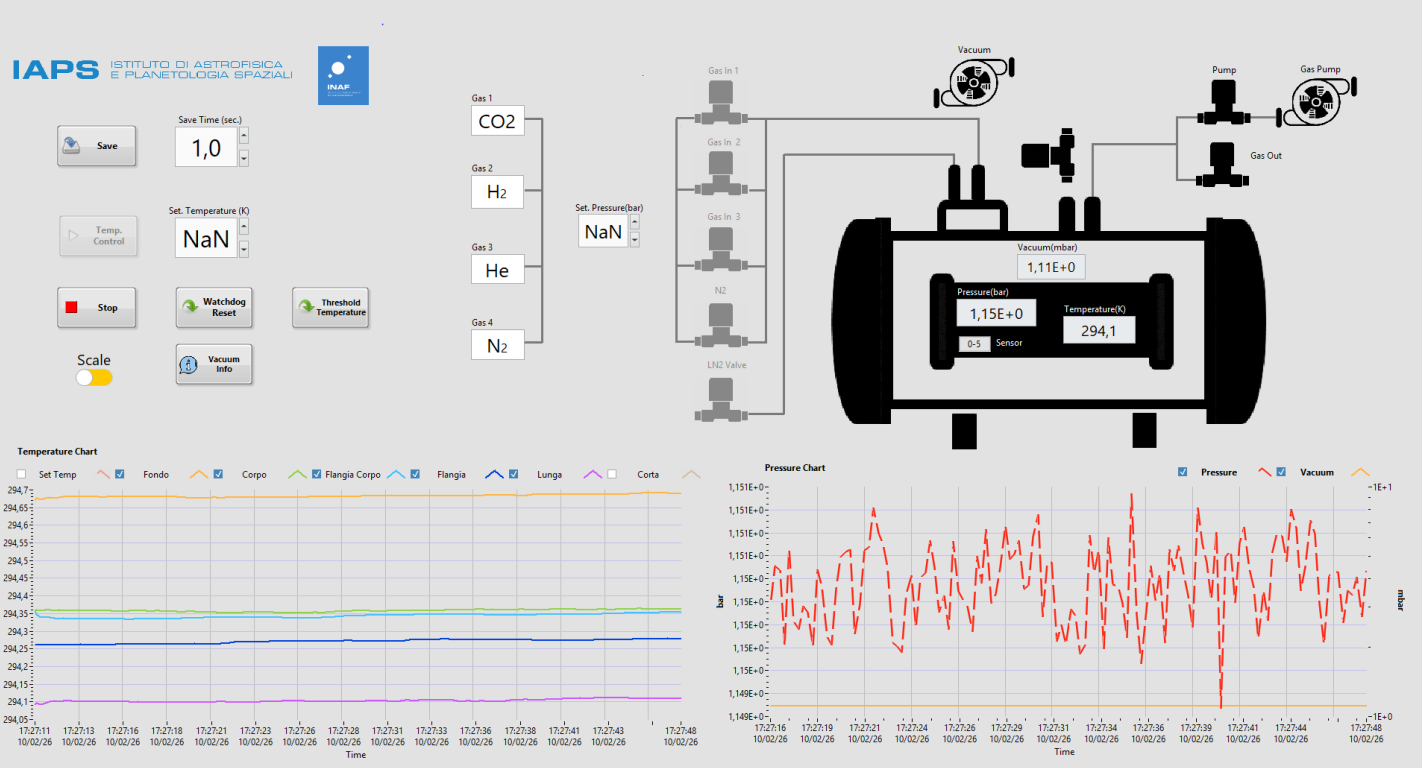
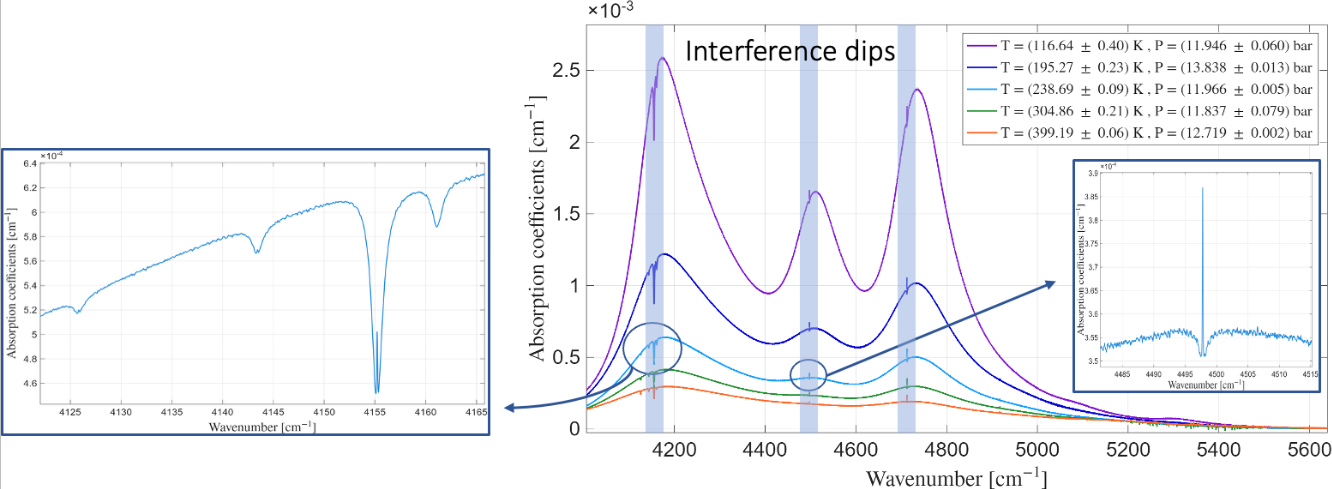
This project focuses on creating a fast radiative transfer code for Mars, named σ4Mars, designed for the fast and accurate production of Martian radiance spectra in the longwave infrared region (100-3000 cm-1) under nadir geometry. The final purpose is including the forward in an inversion algorithm to improve the analysis of current and future Martian datasets and enhance our understanding of the Martian atmosphere.
The σ4Mars model relies on the flexibility and capabilities of the recently developed forward model σ-FORUM (also known as σ-IASI/F2N) [1], a high-performance, multipurpose radiative transfer code, originally developed for studying Earth’s longwave atmospheric radiation. It generates high-resolution spectra while maintaining computational efficiency through the use of precomputed lookup tables for the computation of gas and clouds/aerosol optical depths. Multiple scattering effects are treated using scaling methods, specifically the Chou scaling approximation [2] and the Chou adjustment (Tang correction) [3]. In addition, the code allows the computation of fast analytical derivatives of the radiance with respect to atmospheric and cloud properties, thus being suitable for the application in fast retrieval of spectrally resolved infrared observations.
To adapt σ-FORUM for Martian studies, the following modifications and inputs were implemented:
The code has been tuned to simulate Mars-specific atmospheric characteristics.
New pressure levels were defined to discretize the atmosphere, accounting for Mars’s highly variable surface pressure.
High-resolution optical depths for the most abundant and radiatively active gases were computed using a line-by-line radiative transfer code, the Planetary Spectrum Generator (PSG) developed by NASA [4] and subsequently parametrized as a polynomial function of temperature.
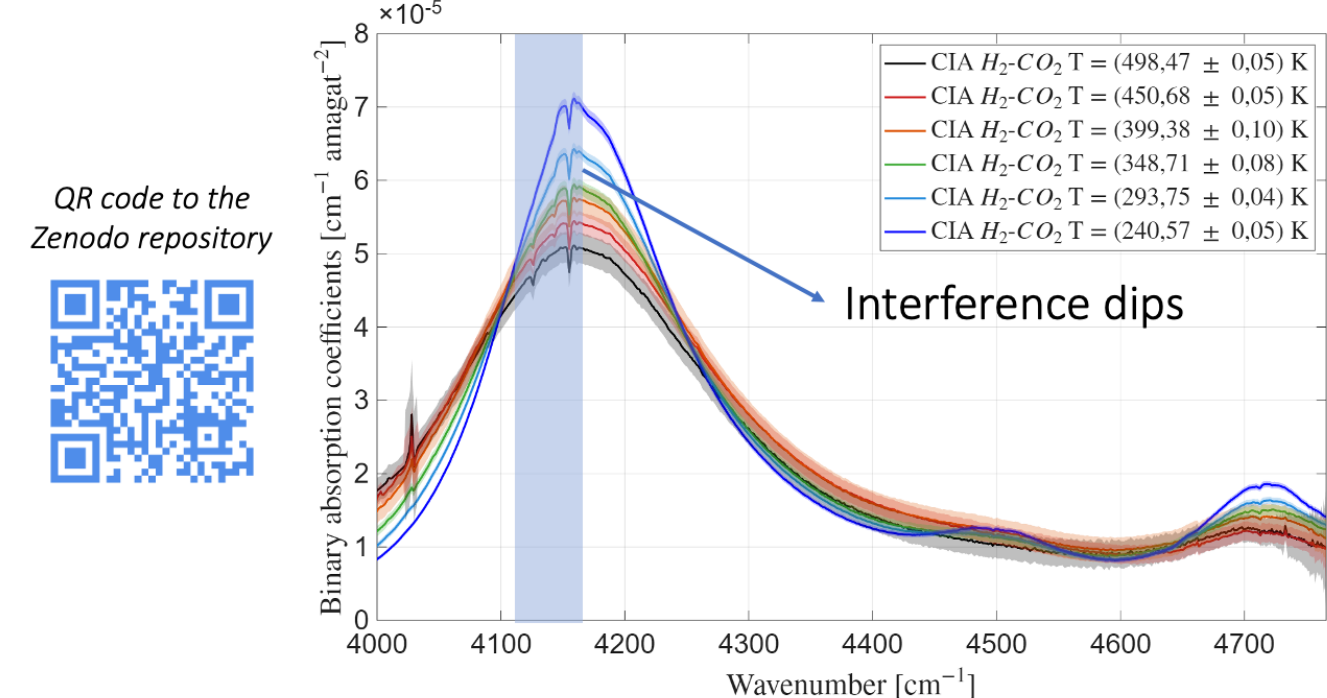
Collision Induced Absorption [5] continuum effect for the self CO2 have been included
Dust properties have been parametrized for the simulation of dusty scenarios
The performance of the model has been evaluated using PSG as reference code by comparing gas transmittances and high-resolution radiance spectra.
[1] Masiello G. et al. (2024) JQSRT, 312, 108814, DOI: 10.1016/j.jqsrt.2023.108814.
[2] Chou M.-D. et al. (1999) Journal of Cimate, 12 (1), pp.159-169, DOI: 10.1175/1520-0442-12.1.159
[3] Tang G. et al. (2018) Journal of Atmospheric Science, 75 (7), pp. 2217 – 2233, DOI: 10.1175/JAS-D-18-0014.1
[4] Villanueva G. L. et al. (2018) JQSRT, 217, pp 86-104, DOI: 10.1016/j.jqsrt.2018.05.023.
[5] Terragni J. et al (2025), JQSRT, 347, 109631, DOI: 10.1016/j.jqsrt.2025.109631.
[6] Guerlet S. et al. (2022), Journal of Geophysical Research: Planets, 127, DOI:10.1029/2021JE007062
[7] Edwards C.S. et al. (2021) Space Sci Rev, 217, 77 DOI: 10.1007/s11214-021-00848-1
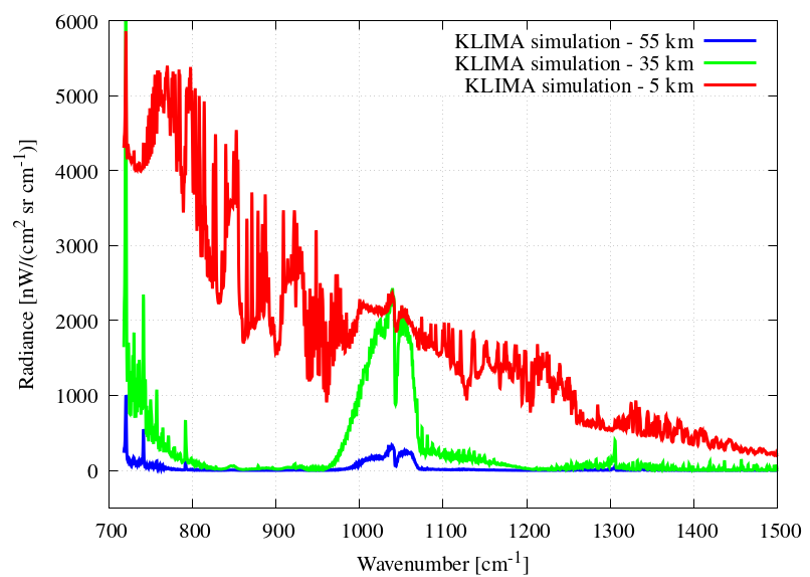
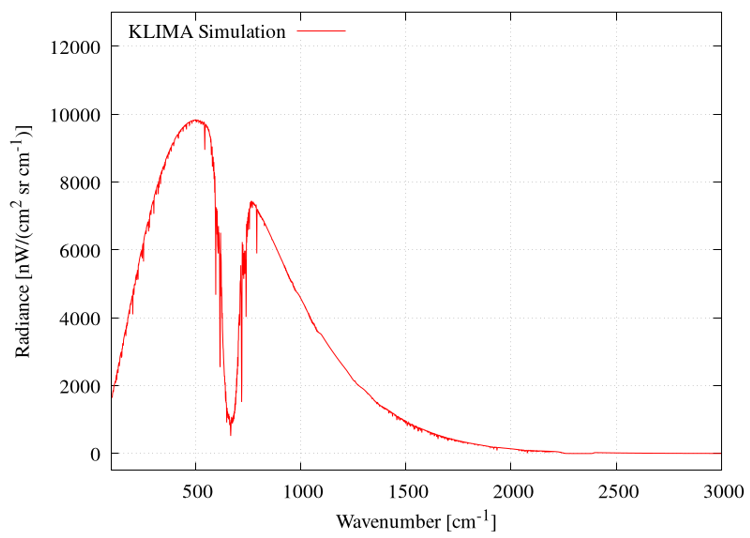
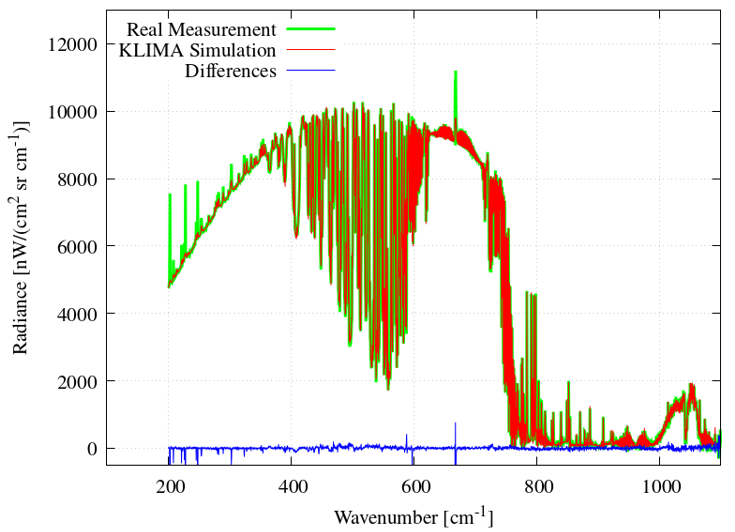
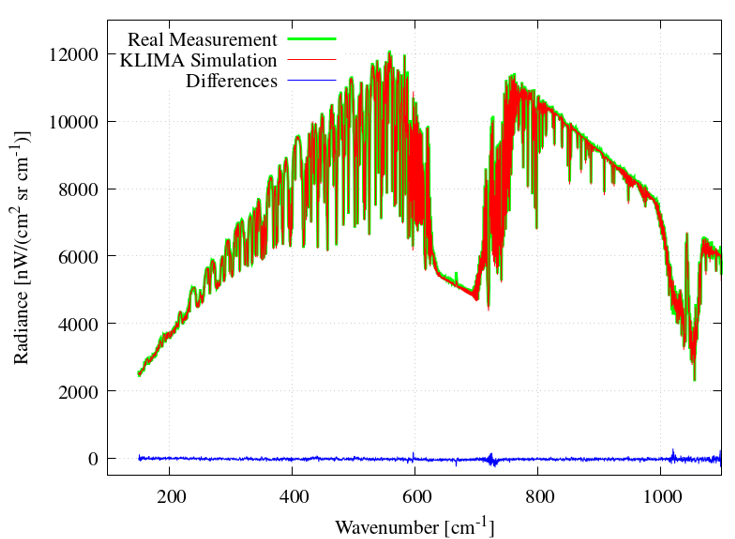
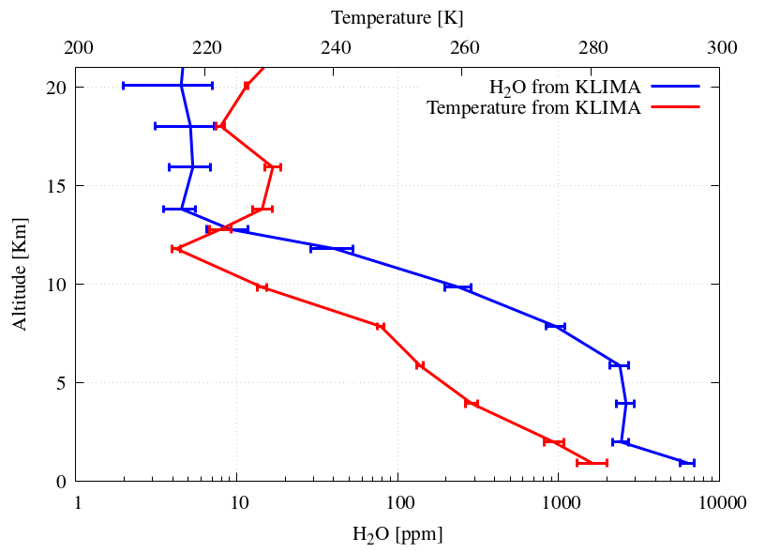
The KLIMA (Kyoto protocoL Informed Management of the Adaptation) [Dinelli et al. 2023] code is a self-standing algorithm developed in FORTRAN at the Research Unit of IFAC CNR of Firenze. KLIMA can be used to simulate and analyse the spectral radiance acquired by remote sensing measurements of the atmosphere in all-sky conditions [Butali et al. 2026 (submitted)]. KLIMA was born from the previous version of the code called MARC (Millimetre-wave Atmospheric-Retrieval Code) [Carli et al. 2007]. KLIMA can be applied to various viewing geometries (limb [Del Bianco et al. 2007][Dinelli et al. 2009], zenith [Belotti et al. 2022] and nadir [Del Bianco et al. 2013][Bianchini et al. 2008][Ceccherini et al. 2010][Tirelli et al. 2021][Sgheri et al. 2022] and spectral bands (from millimetre and sub- millimetre wave [Carli et al. 2007] to the near-infrared [Mazzoni et al. 2008]).
Although KLIMA has been optimized both from run-time and from memory resources point of view, the program requires large computing resources. For this reason, 5 computing servers are operational in the IFAC computing center, each one with 2 CPUs AMD EPIC 9474@3.6GHz, provided with 768GB RAM DDR5, 43.5 TB of SSD raw storage and connectivity up to 100Gb Ethernet; a SSD storage server with total raw capacity of 153.6 TB with connectivity up to 100Gb Ethernet and a new 16 ports 100Gb Ethernet switch.
Furthermore, the CNR-Florence research area has a network infrastructure composed of a passive section of mono-modal optical fibers (type 96/125 OS2) connecting the EMM data-centers and laboratories, and an active section consisting of new fast network switches. The configuration is a star structure: the center is connected to Internet router; the data centers and laboratories of IFAC, INO, IBE, IAC are in the different branches of the star. The fast EMM network is well integrated within the network infrastructure of the Area.
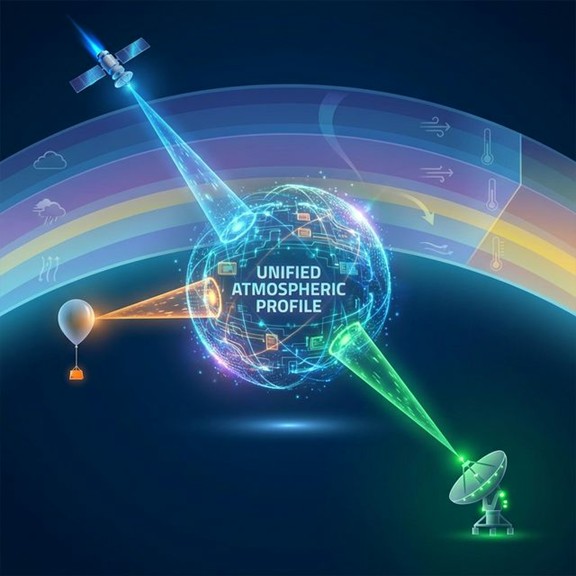
Complete Data Fusion (CDF) is a statistical method designed to optimally combine multiple independent atmospheric profile retrievals into a single, consistent, and information-rich product. It is particularly suited for satellite remote sensing applications, where different instruments provide complementary measurements of the same geophysical quantity (e.g., ozone, temperature, trace gases).
CDF was first introduced by Ceccherini et al. (2015) and has since evolved through several key developments. It is based on optimal estimation theory (Rodgers, 2000) and operates on Level 2 retrieval products, including retrieved profiles, averaging kernel matrices (AKMs), noise covariance matrices (CMs), and a priori profiles with their associated covariance matrices. The method produces a fused profile with its own AKM and CM, ensuring statistical consistency and traceability to the inputs.
Original CDF (2015): Introduced by Ceccherini et al. (2015), this version uses the inverse of the noise covariance matrices to weight the input profiles. It is effective but limited by the potential singularity of these matrices.
Extended CDF (2018): To handle profiles on different vertical grids and from non-coincident observations, Ceccherini et al. (2018) introduced interpolation and coincidence error models, enabling fusion across instruments and platforms.
Improved CDF (2022): Ceccherini, Zoppetti, and Carli (2022) proposed a formulation that replaces noise CMs with retrieval error CMs, which are always non-singular. This version eliminates the need for generalized inverses and improves numerical stability. It also rigorously incorporates interpolation and coincidence errors.
CDF has been applied to ozone profile fusion from Sentinel-4 and Sentinel-5 simulations, and to multi-platform fusion of geostationary and low-Earth orbit satellite data. It enables reprocessing of retrievals with new a priori constraints and supports consistency checks and quality control of retrieval products.
A notable application is presented in Guidetti et al. (2025), where the improved CDF formulation was used to combine MIPAS (limb) and IASI (nadir) ozone profiles over the Himalayas. The fused dataset showed increased vertical information content in the troposphere, improved agreement with ozonesonde data, and reduced retrieval errors, especially in the UTLS region. The fusion successfully propagated MIPAS information to lower altitudes where it has limited sensitivity, demonstrating the method’s ability to enhance the quality of atmospheric datasets and support studies of stratosphere–troposphere exchange and air quality.
Within the EMM (Earth Moon Mars) research infrastructure, the Complete Data Fusion (CDF) technique plays a central role in enabling advanced scientific studies based on real atmospheric data. EMM provides the necessary computational resources, specialized software tools, and expert knowledge to support the application of CDF to multi-instrument satellite observations. By integrating measurements from different instrumens, the CDF allows researchers to generate high-resolution, information-rich atmospheric profiles that are essential for investigating complex processes such as stratosphere–troposphere exchange and air quality dynamics. Through its dedicated CDF platform, EMM facilitates collaborative research and promotes the adoption of this methodology across the scientific community. For more information, please visit the dedicated section of the EMM website.
Rodgers, C. D. (2000) – Inverse Methods for Atmospheric Sounding: Theory and Practice
Ceccherini, S., Carli, B., & Raspollini, P. (2015) – Equivalence of data fusion and simultaneous retrieval
Ceccherini, S., Carli, B., et al. (2018) – Importance of interpolation and coincidence errors in data fusion
Ceccherini, S., Zoppetti, N., & Carli, B. (2022) – An improved formula for the complete data fusion
Tirelli, C., Ceccherini, S., Del Bianco, S., Funke, B., Höpfner, M., Cortesi, U., and Raspollini, P.: Extension of the Complete Data Fusion algorithm to tomographic retrieval products, Atmos. Meas. Tech., 18, 5619–5636, https://doi.org/10.5194/amt-18-5619-2025, 2025.
Guidetti, L., Brattich, E., Ceccherini, S., et al. (2025) – Development and Validation of a New Ozone Dataset Using Complete Data Fusion
EARTH MOON MARS
We firmly believe that the internet should be available and accessible to anyone, and are committed to providing a website that is accessible to the widest possible audience, regardless of circumstance and ability.
To fulfill this, we aim to adhere as strictly as possible to the World Wide Web Consortium’s (W3C) Web Content Accessibility Guidelines 2.1 (WCAG 2.1) at the AA level. These guidelines explain how to make web content accessible to people with a wide array of disabilities. Complying with those guidelines helps us ensure that the website is accessible to all people: blind people, people with motor impairments, visual impairment, cognitive disabilities, and more.
This website utilizes various technologies that are meant to make it as accessible as possible at all times. We utilize an accessibility interface that allows persons with specific disabilities to adjust the website’s UI (user interface) and design it to their personal needs.
Additionally, the website utilizes an AI-based application that runs in the background and optimizes its accessibility level constantly. This application remediates the website’s HTML, adapts Its functionality and behavior for screen-readers used by the blind users, and for keyboard functions used by individuals with motor impairments.
If you’ve found a malfunction or have ideas for improvement, we’ll be happy to hear from you. You can reach out to the website’s operators by using the following email
Our website implements the ARIA attributes (Accessible Rich Internet Applications) technique, alongside various different behavioral changes, to ensure blind users visiting with screen-readers are able to read, comprehend, and enjoy the website’s functions. As soon as a user with a screen-reader enters your site, they immediately receive a prompt to enter the Screen-Reader Profile so they can browse and operate your site effectively. Here’s how our website covers some of the most important screen-reader requirements, alongside console screenshots of code examples:
Screen-reader optimization: we run a background process that learns the website’s components from top to bottom, to ensure ongoing compliance even when updating the website. In this process, we provide screen-readers with meaningful data using the ARIA set of attributes. For example, we provide accurate form labels; descriptions for actionable icons (social media icons, search icons, cart icons, etc.); validation guidance for form inputs; element roles such as buttons, menus, modal dialogues (popups), and others. Additionally, the background process scans all the website’s images and provides an accurate and meaningful image-object-recognition-based description as an ALT (alternate text) tag for images that are not described. It will also extract texts that are embedded within the image, using an OCR (optical character recognition) technology. To turn on screen-reader adjustments at any time, users need only to press the Alt+1 keyboard combination. Screen-reader users also get automatic announcements to turn the Screen-reader mode on as soon as they enter the website.
These adjustments are compatible with all popular screen readers, including JAWS and NVDA.
Keyboard navigation optimization: The background process also adjusts the website’s HTML, and adds various behaviors using JavaScript code to make the website operable by the keyboard. This includes the ability to navigate the website using the Tab and Shift+Tab keys, operate dropdowns with the arrow keys, close them with Esc, trigger buttons and links using the Enter key, navigate between radio and checkbox elements using the arrow keys, and fill them in with the Spacebar or Enter key.Additionally, keyboard users will find quick-navigation and content-skip menus, available at any time by clicking Alt+1, or as the first elements of the site while navigating with the keyboard. The background process also handles triggered popups by moving the keyboard focus towards them as soon as they appear, and not allow the focus drift outside it.
Users can also use shortcuts such as “M” (menus), “H” (headings), “F” (forms), “B” (buttons), and “G” (graphics) to jump to specific elements.
We aim to support the widest array of browsers and assistive technologies as possible, so our users can choose the best fitting tools for them, with as few limitations as possible. Therefore, we have worked very hard to be able to support all major systems that comprise over 95% of the user market share including Google Chrome, Mozilla Firefox, Apple Safari, Opera and Microsoft Edge, JAWS and NVDA (screen readers).
Despite our very best efforts to allow anybody to adjust the website to their needs. There may still be pages or sections that are not fully accessible, are in the process of becoming accessible, or are lacking an adequate technological solution to make them accessible. Still, we are continually improving our accessibility, adding, updating and improving its options and features, and developing and adopting new technologies. All this is meant to reach the optimal level of accessibility, following technological advancements. For any assistance, please reach out to