WP-1500.6 – Regional/global-scale numerical modelling of planetary atmospheres
Scientific and e-infrastructure objectives
Investigation of the physical mechanisms governing the interactions between desert dust and radiation, and their feedback effects, for both the Earth’s and Mars’ atmospheres. For Earth-related activities, the module uses the WRF-Chem numerical model to monitor and forecast the intrusion of Saharan mineral dust into the Mediterranean basin and to study its effects on the radiative and microphysical balance. Similar modelling activities have been implemented for Mars, with particular attention to the role of dust storms in the Martian climate.
Modelling activities are carried out at the CEAM computing centre in Lecce, which hosts the computing server acquired with EMM funds.
Fitting into the EMN component
The module is part of the EMN – Earth and Mars Research Network component, within the context of activities focused on modelling aerosol-atmosphere processes.
Functional units
- WRF-Chem (Weather and Research Forecasting model coupled with Chemistry): A meteorological-chemical model developed by the “National Center for Atmospheric Research” (NCAR, US) and the “National Oceanic and Atmospheric Administration” (NOAA, US);
- NASA Ames Mars Global Climate Model (MGCM 3.2) developed by NOAA/GFDL;
- Mars Surface–Atmosphere Web Interface developed at CNR/ISAC and INAF/OAC.
Contribution of the module to the EMN infrastructure
As part of the EMN modelling modules, this module provides data and interpretations relating to dust events in planetary atmospheres; it supports the validation of radiative and climate models; and provides information for studies on radiative forcing and air quality. It therefore represents a strategic focus for understanding aerosol-atmosphere processes and their climatic and environmental impa
WP-1500.7 – Improving the Italian remote sensing network : from satellite validation to air quality studies
The Po Valley is one of the most polluted regions in Europe. While in-situ measurements can provide an accurate picture of ground-level conditions, remote sensing offers the ability to retrieve information on vertical profiles and the columnar content of pollutants. Additionally, these measurements serve as a reliable reference for satellite validation.
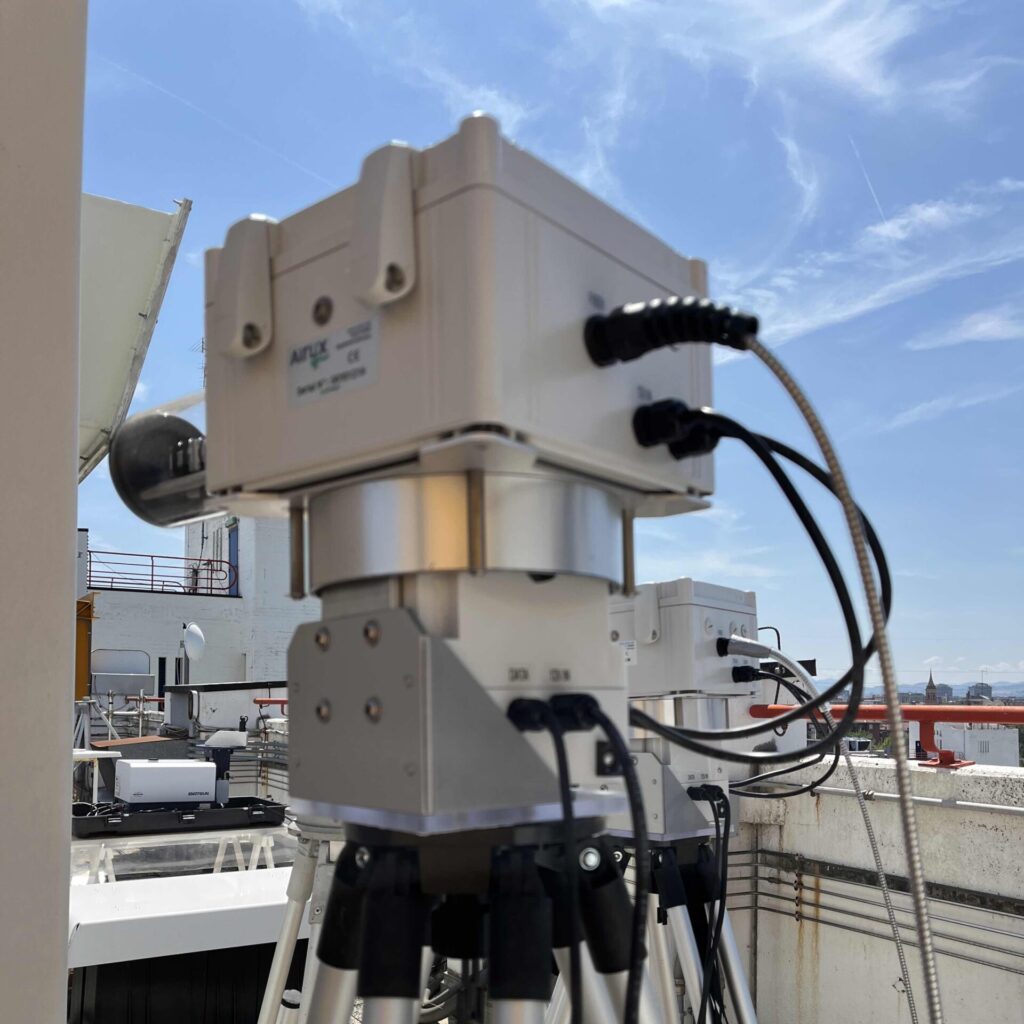
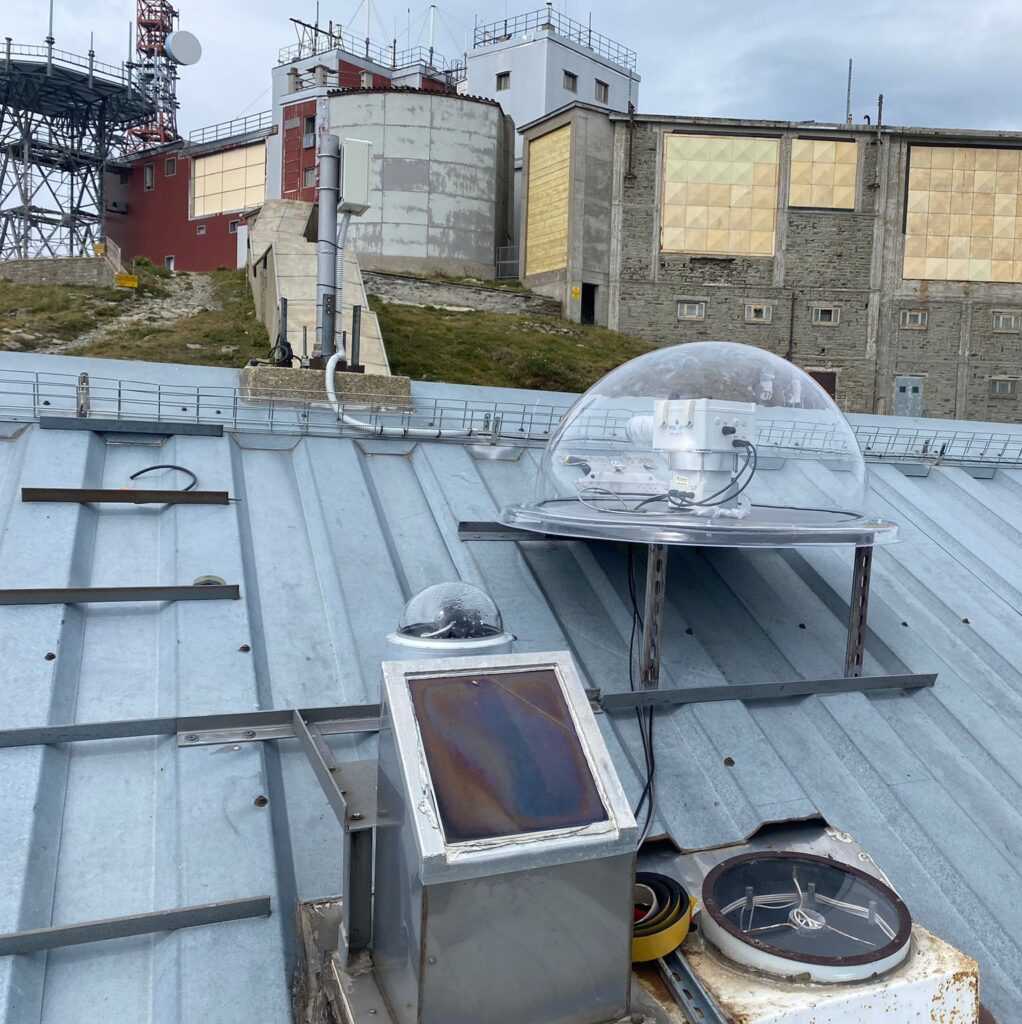
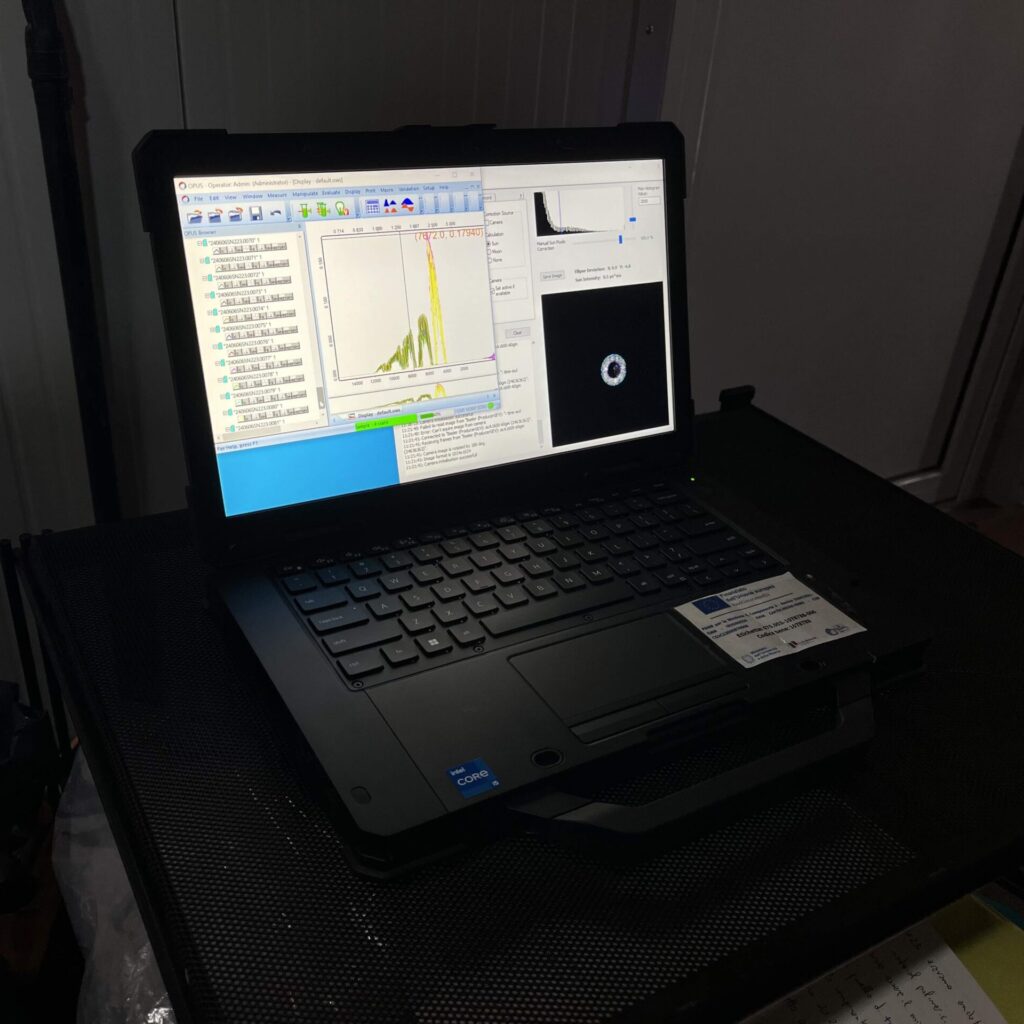
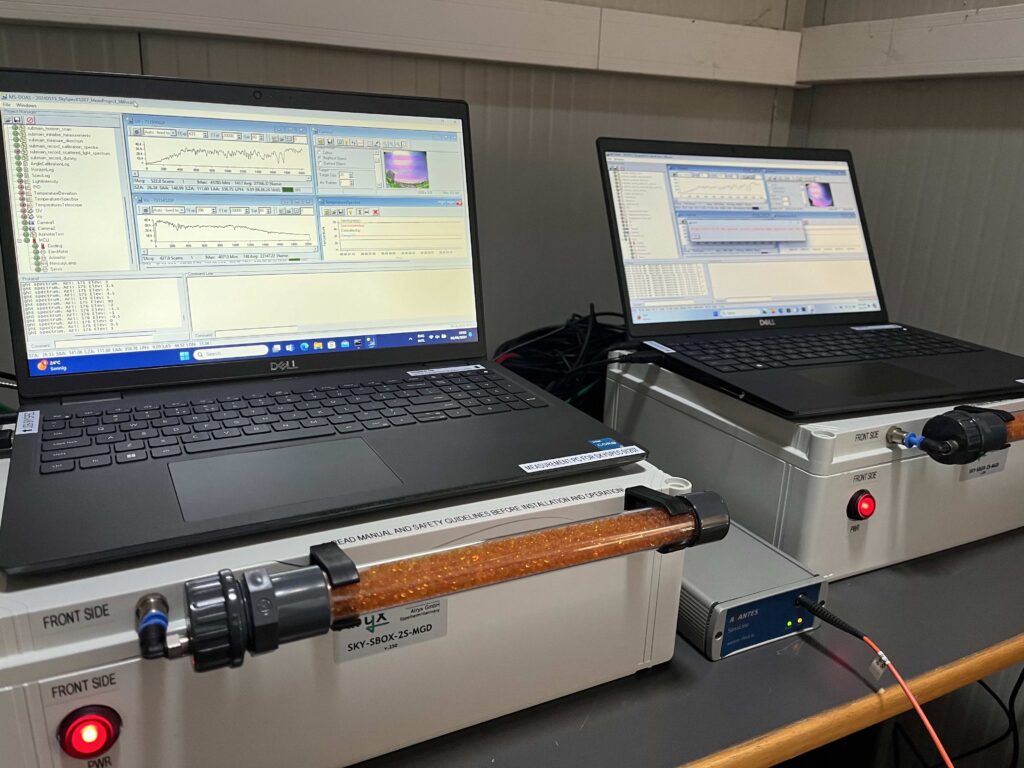
As part of the PNRR-EMM project, the CNR-ISAC acquired and set up two state-of-the-art Multi-AXis Differential Optical Absorption Spectroscopy (MAX-DOAS) systems (SkySpec-2D by Airyx), which have been installed in Bologna and at Mount Cimone. Furthermore, a Fourier Transform Infrared Spectrometer (FTIR), specifically the EM27/SUN by Bruker, is also operated in Bologna in the frame of the EMM project.
The main species retrievable with the MAX-DOAS systems include NO₂, O₃, and HCHO, along with aerosol extinction. The FTIR instrument enables the retrieval of total column amounts of CO₂, CO, and CH₄. The combined use of these two types of instruments enables a comprehensive analysis of air quality and greenhouse gas (GHG) distributions.
All instruments and measurement operations are fully compliant with satellite validation networks such as the Collaborative Carbon Column Observing Network (COCCON) and the FRM4DOAS network.
Data Availability
EM27/SUN data can be downloaded from the ESA (European Space Agency) EVDC website: https://evdc.esa.int/search/ choosing “BOLOGNA” as Location and “FTIR.COCCON” as Data Source Type.
Conferences
MAX-DOAS Measurement Sites in Italy: Overview, NO2 VCD Comparison Against TROPOMI and Profiles Retrieval.- Achilli et al. DOAS Workshop – Salonicco, Greece, 9-11 July 2025
DEVELOPING A NETWORK OF SITES FOR AIR QUALITY STUDIES AND SATELLITE VALIDATION IN THE PO VALLEY, Achilli et al., Living Planet Symposium, 23-27 June 2025, Vienna (Austria)
Air Quality studies and satellite validations using MAX-DOAS measurements in Italy, Achilli et al.,
ATMOS – Bologna (Italy) – 1-5 July 2024
Two new FTIR instruments for the measurement of trace gases over the Po Valley, Pettinari et al., ATMOS – Bologna (Italy) – 1-5 July 2024
Set-up of the first EM27/SUN measurement site in the Po Valley (Italy)- Castelli et al., ICOS –Versailles (France)- 10-12 September 2024
WP-1500.9 – Observation and characterization of desert sand and dust transport events
Scientific and infrastructural purpose
Desert dust is one of the main components of global atmospheric aerosols. Its long-distance transport influences the Earth’s radiation balance, cloud formation and precipitation, air quality, atmospheric chemistry, and human health. The module allows for the systematic monitoring of Saharan advection towards the central Mediterranean, with particular reference to southern Italy, and its multidisciplinary characterization. Activities are conducted at the Environmental-Climate Observatory (ECO) in Lecce, a regional node of the ACTRIS network, integrated with instrumentation connected to the international EARLINET and AERONET networks.
Framework within the EMN component
The module is part of the EMN – Earth and Mars Research Network component, within the scope of activities dedicated to the observation, modeling, and validation of aerosol-atmosphere processes. It falls within the domain of Cal/Val activities and integrated observation of mineral aerosols, contributing to the understanding of the transport, transformation, and impact processes of desert dust in the Mediterranean basin. The module provides operational capabilities for the identification of sand-dust advection (SDA) events, the physical, chemical, and optical characterization of particles, and integrates in situ observations, remote sensing measurements along the atmospheric column, meteorological analyses, and the production of validated datasets to support climate and radiation modeling.
Functional Units:
1.Atmospheric particulate matter (PM) monitoring system
Continuous measurement of mass concentrations and size distribution of atmospheric particulate matter using a PM mass sampler (Swam 5A Dual Channel Monitor) and a number concentration sampler (APS), the latter measuring the number concentration of particles and size distribution (0.5–20 µm) at high temporal resolution.
2.Integration with meteorological data and atmospheric dynamics
Contextualization of aerosol measurements with atmospheric conditions and long-distance transport, both using meteorological parameters (temperature, humidity, wind, pressure, precipitation, solar radiation) and calculating back trajectories with the HYSPLIT model (NOAA/ARL), as well as with DREAM simulations for the identification of desert transport. This allows source-receptor analysis and determination of the origin of air masses.
3.Integration with atmospheric remote sensing
Vertical and columnar characterization of aerosols using a ceilometer for vertical aerosol profiles, Aerosol Optical Depth (AOD), and Angstrom Exponent (AE). Parameters that allow the discrimination of fine vs. coarse aerosols, the identification of dust storm episodes (high AOD, low AE), and the evaluation of the thickness and altitude of dust layers.
4.Data management, validation, and processing infrastructure
Integrated management of environmental data and production of validated datasets. Storage of raw data in a dedicated database, statistical analysis and identification of trends, production of scientific reports.
This unit is a key element in ensuring the reliability and reusability of data within the EMN.
Contribution of the module to the EMN infrastructure
The module, as an observational basis for integration with EMN modeling modules, provides validated datasets on desert dust events in the Mediterranean; support for the validation of radiation and climate models; information for studies on radiative forcing and air quality. It therefore represents a strategic observational node for understanding aerosol-atmosphere processes, improving the representation of the coarse fraction in models, and analyzing climate and environmental impacts.
WP-1500.12
Martian facility for sand/dust mobilization: planetary images, lab experiment, terrestrial analogues
